New Research on Silicone POSS-Modified Epoxy Resin Solves the Industry Challenge of “High Strength but Low Toughness” in Epoxy Materials - Silicone Resin Factory&supplier
Silicone Resin
Everything you need to know about our products and company
Recently, key research achievements on epoxy resin modified by silicone polyhedral oligomeric silsesquioxane (POSS) have been realized. Leveraging the unique nano organic-inorganic hybrid cage structure of POSS, this research achieves simultaneous improvements in heat resistance, toughness, dielectric properties and flame retardancy of epoxy resin. It breaks the long-standing technical bottleneck of conventional epoxy modification where toughening comes at the cost of thermal resistance, and provides domestic high-performance resin solutions for high-end sectors including electronic encapsulation, advanced composite materials and aerospace adhesives.
Epoxy resin features high bonding strength, convenient processing and excellent electrical insulation. It is widely used in PCBs, chip encapsulation, carbon fiber composites, structural adhesives and other fields. However, its inherent drawbacks such as high brittleness, thermal decomposition at elevated temperatures, high curing internal stress and high dielectric loss restrict its application under highly reliable, alternating high-low temperature working conditions. Traditional toughening methods using rubber or powder fillers usually sacrifice thermal stability, modulus or transparency, creating a tough trade-off for formulators.
POSS refers to silicon-based cage molecules with a size of approximately 1–3 nm. Its core consists of a rigid inorganic Si-O-Si skeleton, and reactive functional groups such as epoxy and amino groups can be precisely grafted onto the vertex sites. It combines the thermal stability and low dielectric properties of inorganic materials with good compatibility between organic groups and the epoxy matrix. In this project, functionalized silicone POSS is adopted as nano crosslinking nodes. Molecular design is applied to control the covalent dispersion of POSS within the epoxy network, avoiding agglomeration and interfacial defects commonly seen with powder fillers. Uniformly embedded in the epoxy crosslinking network, POSS cages absorb energy through crack pinning and deflection during crack propagation to realize toughening and reinforcement. The stable Si-O skeleton forms a dense siloxane char layer upon heating, raising the thermal decomposition temperature and char yield and enhancing flame retardancy. Meanwhile, free volume is introduced to reduce the dielectric constant and dielectric loss of the system.
Test results show that at the optimal loading level, the modified system achieves notable increases in impact strength and flexural modulus compared with neat epoxy. Its glass transition temperature and thermal stability rise simultaneously, while curing shrinkage decreases. Optimized dielectric performance meets the requirements of high-frequency electronic insulation. The system can maintain good light transmittance for optical encapsulation applications. It is compatible with mainstream amine and anhydride curing agents, and fits existing production processes such as potting, compression molding and vacuum infusion without major equipment renovation.
According to the R&D lead, different from simple blending and filling, the core of this research is the in-situ construction of a hybrid crosslinking network using reactive POSS. POSS is chemically bonded into the epoxy backbone instead of physical mixing only, which greatly improves interfacial adhesion and batch consistency. Grades with epoxy, amino, phenyl and other functional POSS can be customized to balance targeted performance indicators including low dielectric property, humidity-heat resistance, ultra-low-temperature toughness and flame retardancy.
At present, encapsulation resins for high-end electronics, new energy power devices and aerospace composites face stringent requirements for low dielectric constant, high Tg, reflow soldering resistance and anti-aging performance. High-end imported POSS-modified materials suffer from long lead times and high costs. This achievement opens up the application path of silicone POSS in epoxy systems, and completes the technical chain covering POSS monomer synthesis, formulation compounding and performance verification, supporting the independence of domestic supply chains for electronic materials and advanced composites.
Our most popular products loved by customers worldwide
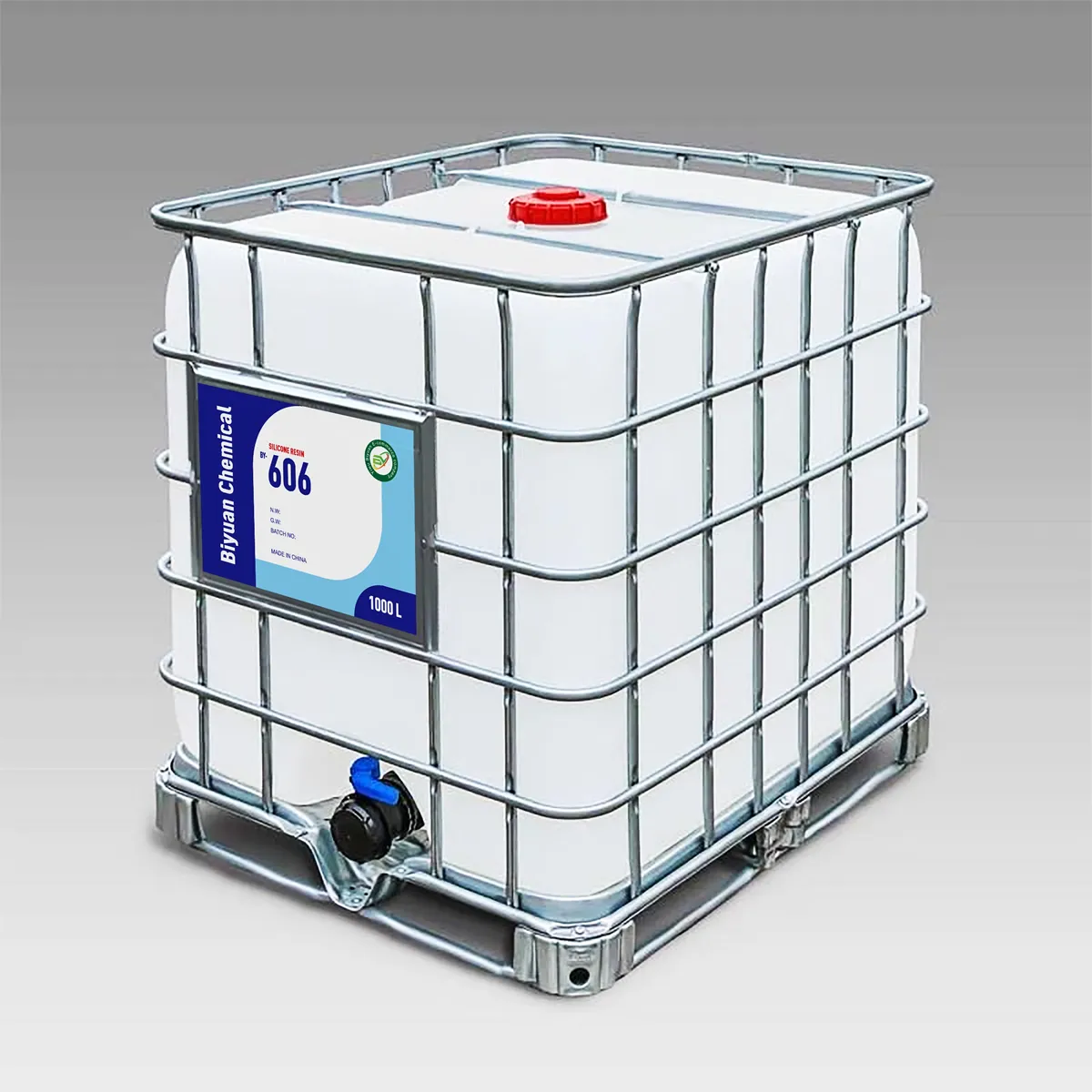
Silicone resins transform release agent technology through their exceptional thermal stability and non-stick properties. These high-performance materials create durable, cross-linked release layers that prevent adhesion in demanding molding and casting applications. The resins withstand temperatures exceeding 300°C while maintaining consistent release p.
Silicone resins deliver breakthrough performance in coating applications through their exceptional weather resistance and thermal stability. These advanced materials form durable, protective networks that maintain integrity under extreme environmental conditions, including prolonged UV exposure and temperatures ranging from -50°C to 300°C. Meeting inter.
Silicone resins significantly enhance plastic and rubber products through their unique cross-linking capabilities and surface modification properties. These high-performance additives improve thermal stability, weather resistance, and processing characteristics across various polymer systems. Meeting international industry standards, silicone resins off.
Silicone resins deliver exceptional thermal stability (up to 400°C) and mechanical strength to composite materials. These high-performance resins improve processing efficiency while enhancing electrical insulation and flame retardancy. Compatible with organic and inorganic fillers, they ensure uniform distribution and strong interfacial adhesion. The re.