Stepwise Copolymerization and Dual Crosslinking: Synergistic Optimization of Hardness and Flexibility for Polyester-Modified Silicone Resins - Silicone Resin Factory&supplier
Silicone Resin
Everything you need to know about our products and company
Balancing hardness and flexibility of polyester-modified silicone resins is an engineering task covering molecular structure design, crosslinking network construction, and coordinated optimization of formulation parameters and process conditions. A validated integrated solution can achieve a favorable balance with pencil hardness of 2H and positive impact strength of 50 kg·cm simultaneously. Operationally, it is recommended to start with molecular structure design, rapidly locate the performance window by adjusting silicone content and polyol type, and rigorously control copolymerization and curing processes to stably attain the target performance.
The balance point between hardness and flexibility can be systematically shifted by varying the dosage and type of key components.
Performance data indicate that higher silicone content improves the heat resistance and hardness of the resin, while flexibility decreases correspondingly. For instance, in a patented system, when the content of tetraethyl orthosilicate (used to introduce nano-SiO₂) increases from 0% to 12.5%, hardness rises from 3H to 4–5H, yet flexibility deteriorates from 1–2T to 4T. The optimal ratio shall be determined according to targeted performance in practical applications.
The type of polyol used for polyester synthesis exerts a remarkable influence on properties. At identical silicone content, polyester synthesized with ethylene glycol delivers the best flexibility and adhesion but the poorest heat resistance. Trimethylolpropane (TMP), by contrast, offers a superior overall balance among hardness, flexibility and heat resistance, making it the preferred choice.
Incorporation of 5–25% nano-fillers (e.g., nano-SiO₂, nano-alumina) effectively boosts hardness and abrasion resistance without substantial impairment of flexibility.
Synthesize the polyester prepolymer first. Once its acid value drops below 8 mgKOH/g, slowly add silicone oligomers for reaction. This facilitates chemical bonding rather than physical blending and improves microscale homogeneity.
Maintain the copolymerization temperature at 190–210 °C with an agitation speed of approximately 400 rpm to avoid aggregation caused by localized overconcentration of silicone. The reaction endpoint is defined when the system viscosity reaches around 1500 mPa·s, and the hydroxyl conversion rate monitored via FT IR exceeds 95%.
Thermal curing (instead of UV curing) features a relatively slow reaction rate, which helps reduce internal coating stress and lowers the risk of warpage and cracking. This is critical for preserving flexibility.
Our most popular products loved by customers worldwide
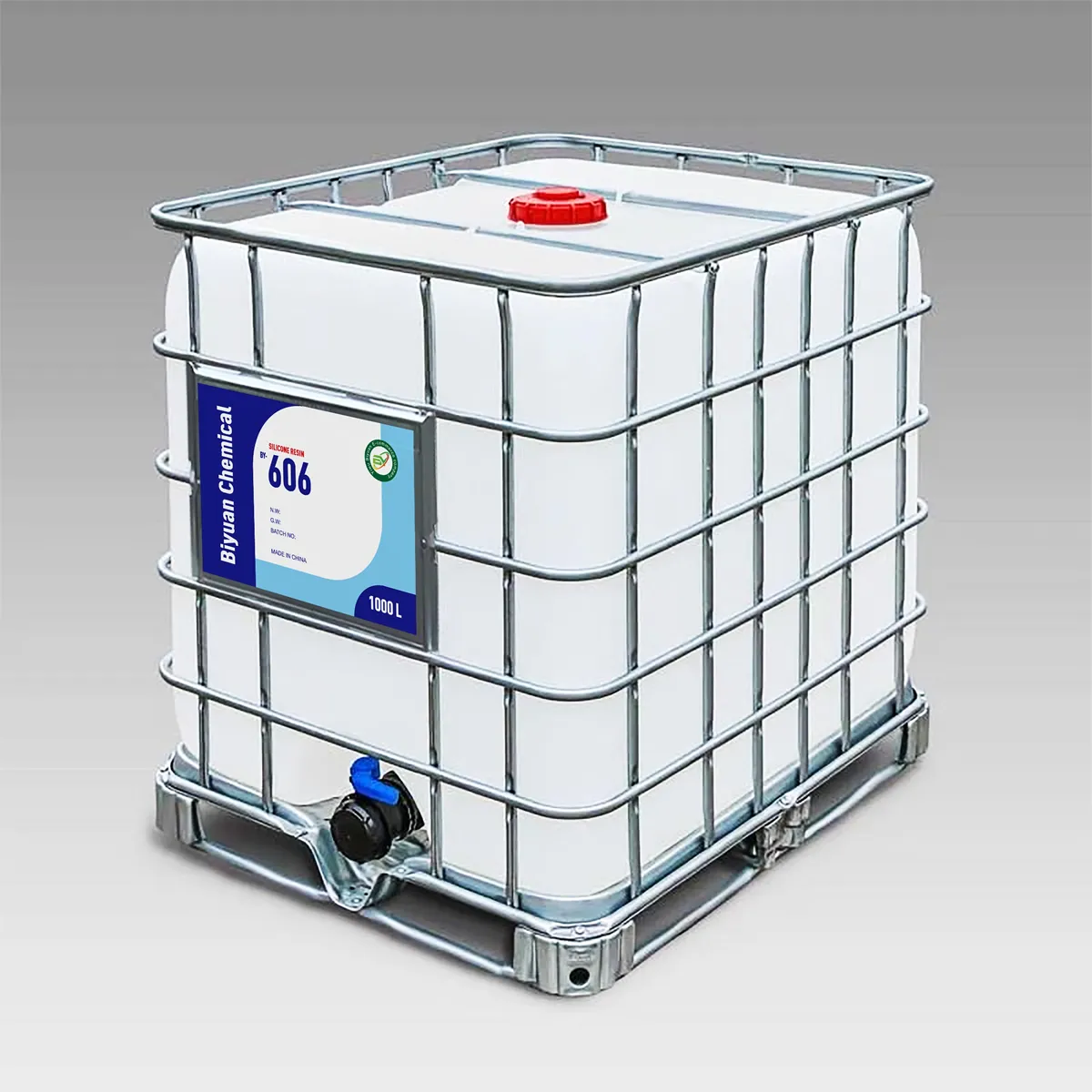
Silicone resins transform release agent technology through their exceptional thermal stability and non-stick properties. These high-performance materials create durable, cross-linked release layers that prevent adhesion in demanding molding and casting applications. The resins withstand temperatures exceeding 300°C while maintaining consistent release p.
Silicone resins deliver breakthrough performance in coating applications through their exceptional weather resistance and thermal stability. These advanced materials form durable, protective networks that maintain integrity under extreme environmental conditions, including prolonged UV exposure and temperatures ranging from -50°C to 300°C. Meeting inter.
Silicone resins significantly enhance plastic and rubber products through their unique cross-linking capabilities and surface modification properties. These high-performance additives improve thermal stability, weather resistance, and processing characteristics across various polymer systems. Meeting international industry standards, silicone resins off.
Silicone resins deliver exceptional thermal stability (up to 400°C) and mechanical strength to composite materials. These high-performance resins improve processing efficiency while enhancing electrical insulation and flame retardancy. Compatible with organic and inorganic fillers, they ensure uniform distribution and strong interfacial adhesion. The re.