Ceramic Film Guards Long Roads, Technology Safeguards Smooth Travel - Silicone Resin Factory&supplier
Silicone Resin
Everything you need to know about our products and company
islands are exposed to the open air for prolonged periods. Subjected to constant sunlight, rainwater and de-icing agents, they suffer recurring defects including coating peeling and steel bar corrosion, trapped in a chronic maintenance cycle of “repair and failure, failure and repair”. A Chinese enterprise has successfully developed a water-based nano-ceramic eco-friendly inorganic new material through civilian conversion of military-grade nanotechnology. It forms a dense 5-nanometer ceramic film to create a long-term protective shield for road and bridge components, shifting highway maintenance from reactive emergency repair to preventive maintenance.
The newly deployed water-based nano-ceramic material is an innovative breakthrough developed on the basis of waterborne ceramic coatings, leveraging core technologies of inorganic silicon modification and homogeneous dispersion. It addresses the long-standing industry bottleneck of conventional coatings: either flexible yet corrosion-prone, or corrosion-resistant but crack-susceptible. Formulated with silicone resin as the base material, compounded with titanium oxide, aluminum oxide and rare-earth functional components, the material forms a 5-nanometer composite system via hydrolysis and condensation reactions. A dense, sealed ceramic film is generated on the substrate surface, blocking the ingress of corrosive media through dual mechanisms: physical sealing and chemical bonding.
It combines the merits of organic coatings — strong adhesion and easy application — and inorganic ceramic coatings: high hardness, corrosion resistance, fire resistance and non-toxicity. It features lotus-leaf self-cleaning performance. Its low-VOC eco-friendly formulation permits construction in water source protection zones and ecologically sensitive areas, and forms stable films on diverse substrates including concrete, steel and FRP (fiberglass reinforced plastic).
While traditional coatings require refurbishment every 1–2 years, the water-based nano-ceramic material delivers long-term protection for 3–5 years under normal service conditions, offering prominent advantages in whole-life-cycle cost. In terms of structural safety, the compact ceramic film blocks moisture and chloride ion intrusion, slows concrete carbonation and steel bar corrosion expansion, and improves the structural resilience of roads and bridges. Ecologically, its low-VOC system avoids pollution risks from solvent-borne coatings, supporting the delivery of the “Dual Carbon” goals in the transportation sector. For traffic safety, the coating maintains stable retroreflectivity, improving visibility for driving in rain, fog and at night. It is anti-graffiti and oil-resistant, sustaining traffic warning performance over time.
Our most popular products loved by customers worldwide
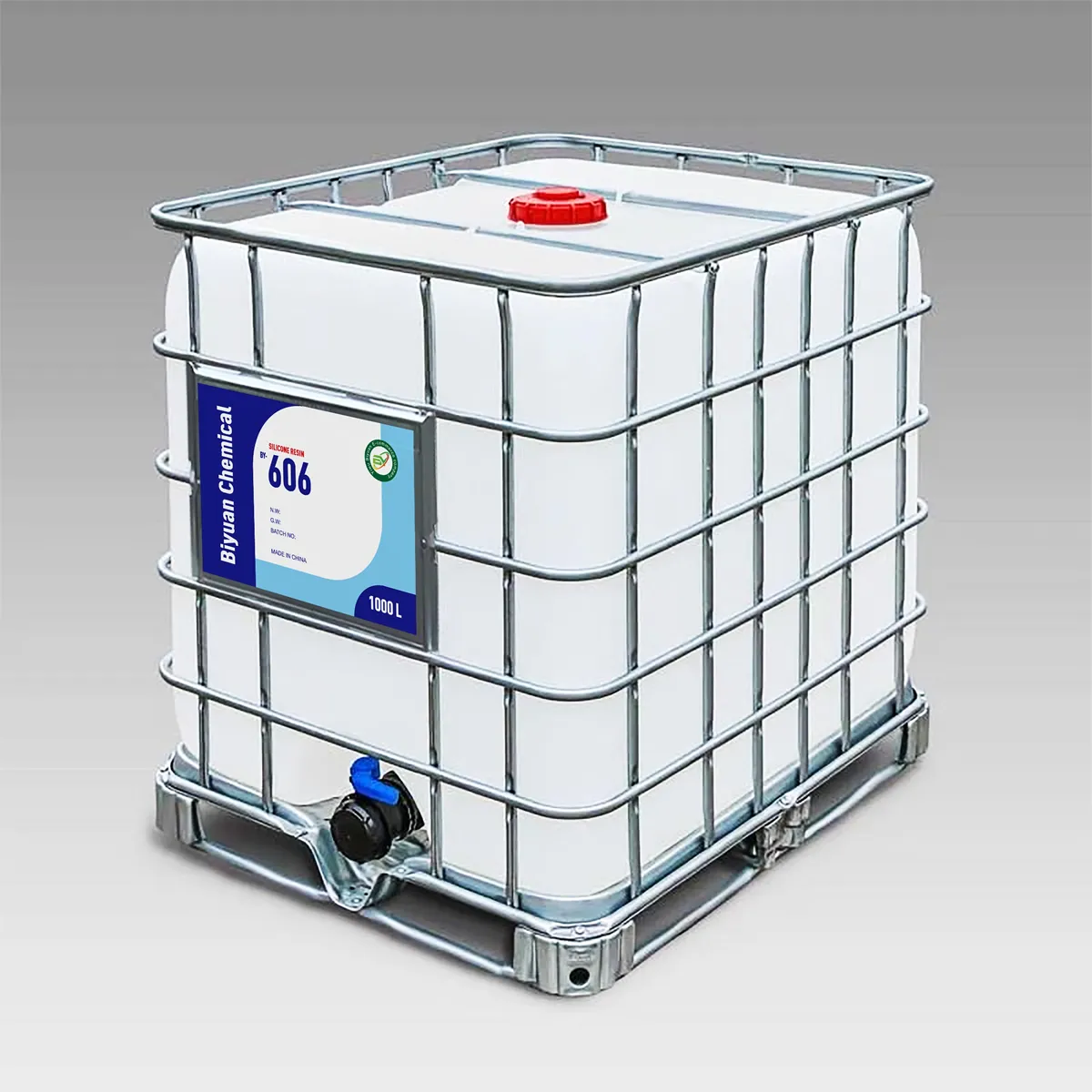
Silicone resins transform release agent technology through their exceptional thermal stability and non-stick properties. These high-performance materials create durable, cross-linked release layers that prevent adhesion in demanding molding and casting applications. The resins withstand temperatures exceeding 300°C while maintaining consistent release p.
Silicone resins deliver breakthrough performance in coating applications through their exceptional weather resistance and thermal stability. These advanced materials form durable, protective networks that maintain integrity under extreme environmental conditions, including prolonged UV exposure and temperatures ranging from -50°C to 300°C. Meeting inter.
Silicone resins significantly enhance plastic and rubber products through their unique cross-linking capabilities and surface modification properties. These high-performance additives improve thermal stability, weather resistance, and processing characteristics across various polymer systems. Meeting international industry standards, silicone resins off.
Silicone resins deliver exceptional thermal stability (up to 400°C) and mechanical strength to composite materials. These high-performance resins improve processing efficiency while enhancing electrical insulation and flame retardancy. Compatible with organic and inorganic fillers, they ensure uniform distribution and strong interfacial adhesion. The re.